At NTP Composites, we do more than manufacture carbon rims—we also build complete wheelsets for brands around the world. When selecting a hub, factors such as engagement, weight, and appearance often receive the most attention. However, one critical component is frequently overlooked: the bearing.
Hub bearings play a vital role in wheel performance, durability, and maintenance requirements. They reduce friction and ensure smooth wheel rotation, efficient power transfer, and long-term reliability.In this guide, we'll explain the fundamentals of bicycle hub bearings, including bearing types, seal designs, industry standards, and ceramic bearing options, helping wheel brands and OEM buyers make more informed specification decisions.
Bicycle Bearings 101
Bicycle bearings generally fall into two categories:
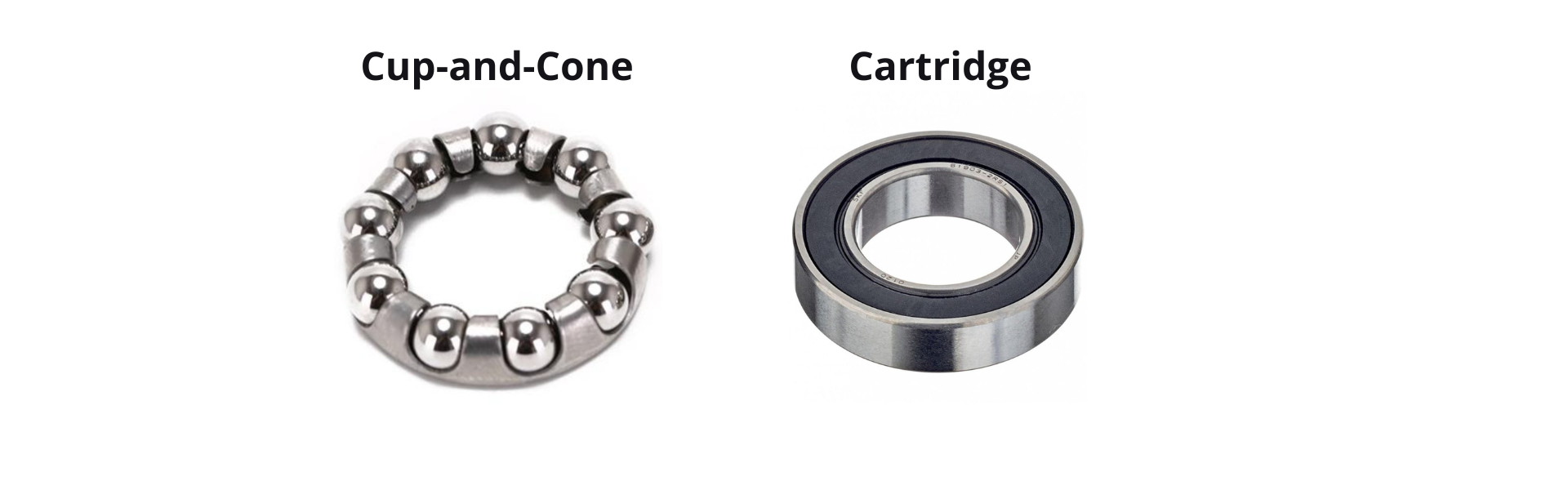
Cup-and-Cone Bearings
Also known as loose-ball bearings, cup-and-cone systems use individual ball bearings that run between adjustable cups and cones. This traditional design is still found on some hubs and allows individual components to be cleaned, lubricated, adjusted, and replaced.
Cartridge Bearings
Modern bicycle hubs predominantly use cartridge bearings. These are pre-assembled, self-contained units that simplify installation and replacement while offering consistent performance. The remainder of this article focuses on cartridge bearings.
A typical cartridge bearing consists of:
- Inner race
- Ball bearings
- Cage (retainer)
- Outer race
- Seals
Radial vs. Angular Contact Bearings
Radial bearings are designed primarily to support loads acting perpendicular to the bearing axis. While highly efficient under radial loads, they are less capable of handling significant axial (side) loads.Angular contact bearings are designed to handle both radial and axial loads simultaneously. Because they are directional, they require precise installation and tighter manufacturing tolerances. They are typically preloaded to maintain consistent contact between bearing surfaces and minimize play.Although angular contact bearings can offer performance advantages, their effectiveness depends heavily on manufacturing precision and proper assembly.
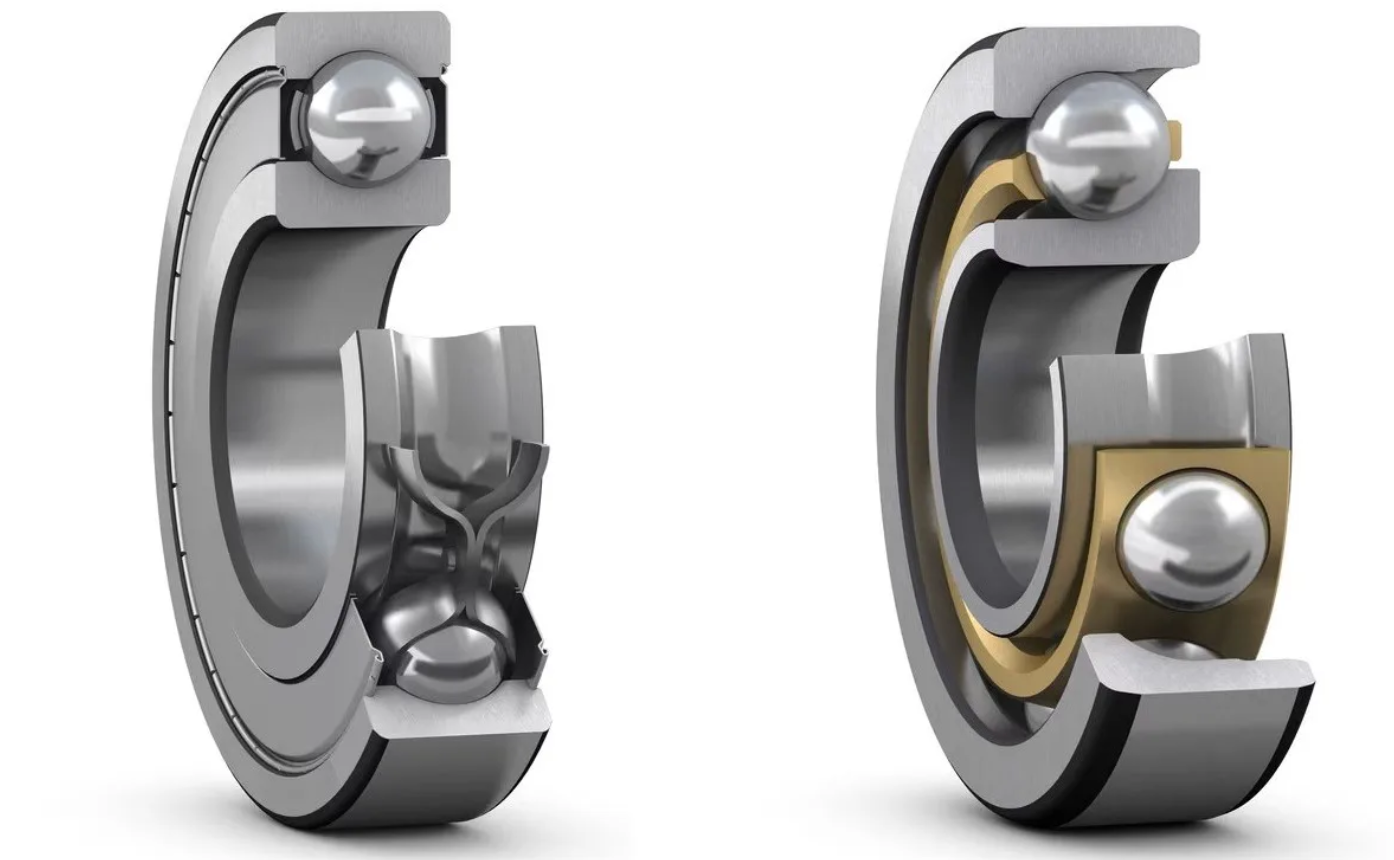
Image credit: SKF
Bearing Seals: Protection vs. Rolling Resistance
Bearing seals serve two essential functions:
- Retaining lubricant inside the bearing
- Preventing contaminants such as water, mud, and dust from entering
While seals create a small amount of additional friction, they significantly extend bearing life in real-world riding conditions. Seal designs vary considerably between manufacturers.
Single-Sealed, Double-Sealed, and Labyrinth Seals
Single-Sealed BearingsFeature a basic sealing structure that provides minimal protection and low friction.Double-Sealed BearingsUse seals on both sides of the bearing to improve resistance against contamination and moisture.Labyrinth SealsLabyrinth sealing systems use a more complex path that contaminants must travel before reaching the bearing interior. This design can significantly improve weather resistance and help channel water and debris away from the bearing.As a general rule:Greater sealing protection usually results in slightly higher friction.Durability-focused hub brands often utilize labyrinth sealing systems, while lightweight road hubs may prioritize lower rolling resistance.
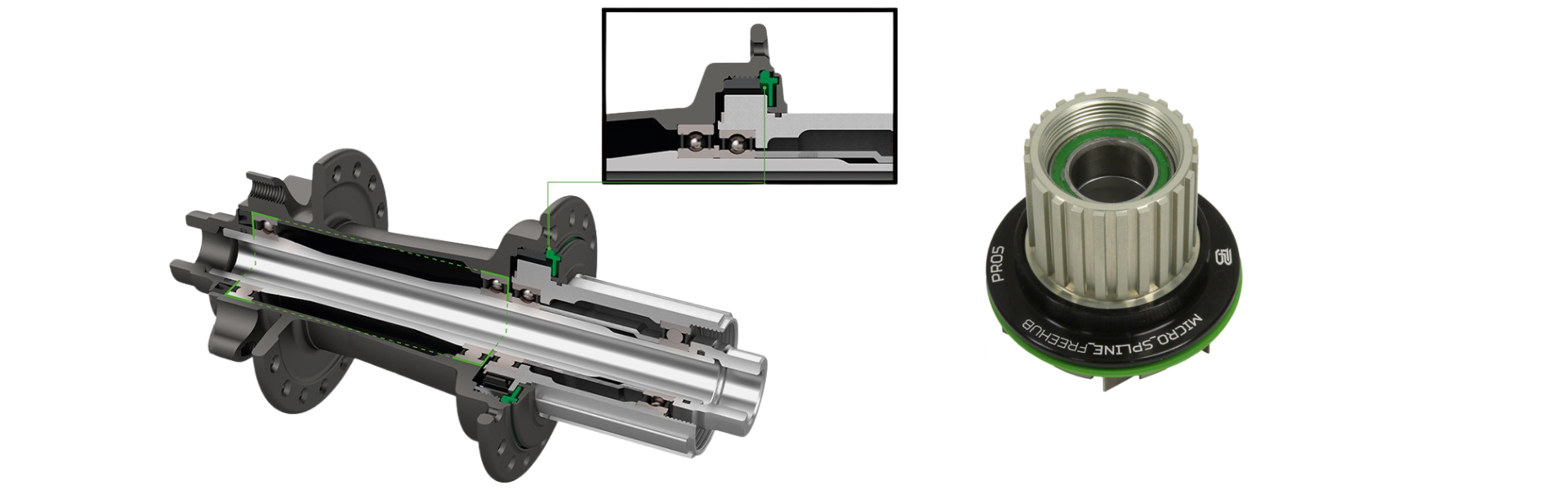
Image credit: Hope Tech
Contact vs. Non-Contact Seals
Contact Seals
Contact seals physically touch both bearing races, providing maximum protection against water and dirt intrusion. The trade-off is slightly increased rolling resistance.
Non-Contact Seals
Non-contact seals minimize friction by reducing seal contact with the races. They generally spin more freely but offer less protection in harsh conditions.Among Taiwanese bearing suppliers commonly used in OEM bicycle hubs:
- TPI bearings often prioritize durability with full-contact sealing designs.
- S&S bearings are frequently specified with lower-friction sealing configurations.
The optimal choice depends on the intended riding discipline and performance objectives.
Understanding Bearing Codes and Industry Standards
Bearing dimensions and tolerances are standardized by organizations including:
- ISO (International Organization for Standardization)
- DIN (German Institute for Standardization)
- JIS (Japanese Industrial Standards)
- ABEC (Annular Bearing Engineering Committee)
Most cartridge bearings feature identification codes printed directly on the bearing seal, making it possible to identify the bearing specification without complete disassembly.
Decoding ISO and DIN Bearing Codes
ISO and DIN systems typically use four or five digits.Example: 6902
- First digit: Bearing type (6 = radial, 7 = angular contact)
- Second digit: Bearing series or width classification
- Third digit: Outer diameter series
- Final digit(s): Bore (inner diameter) specification
Decoding JIS Bearing Codes
JIS bearing codes typically use three digits:
- First digit: Bearing type
- Second digit: Outer diameter series
- Final digit: Bore size
ABEC Ratings Explained
The Annular Bearing Engineering Committee (ABEC) developed a standardized system for measuring bearing manufacturing tolerances.Common ABEC ratings include:
- ABEC 1
- ABEC 3
- ABEC 5
- ABEC 7
- ABEC 9
Higher ABEC ratings indicate tighter manufacturing tolerances.The ABEC standard evaluates characteristics such as:
- Bore diameter accuracy
- Parallelism
- Radial runout
For most bicycle applications, ABEC 3 and ABEC 5 bearings provide an excellent balance of performance, durability, and cost.It is important to note that ABEC ratings measure dimensional precision only. They do not evaluate sealing quality, material selection, lubrication, corrosion resistance, or overall bearing durability.
Common Bicycle Bearing Sizes
|
Code
|
ID
|
OD
|
Width
|
|
608
|
8mm
|
22mm
|
7mm
|
|
608-9
|
9mm
|
22mm
|
7mm
|
|
609
|
9mm
|
24mm
|
7mm
|
|
6000
|
10mm
|
26mm
|
8mm
|
|
6001
|
12mm
|
28mm
|
8mm
|
|
688
|
8mm
|
16mm
|
5mm
|
|
6801/61801
|
12mm
|
21mm
|
5mm
|
|
6802/61802
|
15mm
|
24mm
|
5mm
|
|
6803/61803
|
17mm
|
26mm
|
5mm
|
|
6804/61804
|
20mm
|
32mm
|
7mm
|
|
6805-6/61805-6
|
25mm
|
37mm
|
6mm
|
|
6805-7/61805-7
|
25mm
|
37mm
|
7mm
|
|
6806/61806
|
30mm
|
42mm
|
7mm
|
|
6810/61810
|
50mm
|
65mm
|
7mm
|
|
699
|
9mm
|
20mm
|
6mm
|
|
6900/61900
|
10mm
|
22mm
|
6mm
|
|
6901/61901
|
12mm
|
24mm
|
6mm
|
|
6902/61902
|
15mm
|
28mm
|
7mm
|
|
6903/61903
|
17mm
|
30mm
|
7mm
|
|
6903-18/61903-18
|
18mm
|
30mm
|
7mm
|
|
15267
|
15mm
|
26mm
|
7mm
|
|
17287
|
17mm
|
28mm
|
7mm
|
Ceramic Bearings: Are They Worth the Upgrade?
One of the most common questions in wheel specification is whether ceramic bearings justify their additional cost.Most bicycle ceramic bearings are hybrid bearings that combine:
- Silicon nitride ceramic balls
- Steel races
This configuration aims to reduce rolling resistance while maintaining structural strength.
Pros of Ceramic Bearings
- Lower rolling resistance due to highly precise ball geometry
- Increased hardness and wear resistance
- Minor weight savings (typically around 6 g per hub set)
- Strong marketing appeal for premium wheel products
Cons of Ceramic Bearings
- Significantly higher cost
- Limited real-world performance gains for many riders
- Increased brittleness under severe impact conditions
It is also important to recognize that bearing quality varies widely. A high-quality steel bearing can often outperform a poorly manufactured ceramic bearing.For wheel brands, ceramic bearings can be an attractive upgrade option within a premium product range, while high-quality steel bearings remain the most cost-effective solution for the majority of riders.
Final Thoughts
When selecting hubs for a wheelset, bearings should never be treated as an afterthought. Bearing type, sealing configuration, manufacturing quality, and material selection all influence long-term performance, durability, and rider satisfaction.For most applications, the optimal bearing choice is not necessarily the most expensive option, but the one that best matches the intended riding conditions and product positioning.At NTP Composites, we help wheel brands develop complete wheel solutions, from carbon rim engineering and wheel building to hub and bearing specification. Whether you're launching a new wheel lineup or refining an existing lineup, our team can help identify the most suitable component configuration for your market.

