Aug.2026 19
Views: 72

270 g vs. 250 g XC Carbon Rims: Which One Should Wheel Brands Choose?

Introduction
Compare 250g and 270g XC carbon rims. Learn how rim weight affects stiffness, impact resistance, spoke selection, and XC wheel design for different rider needs.
Details
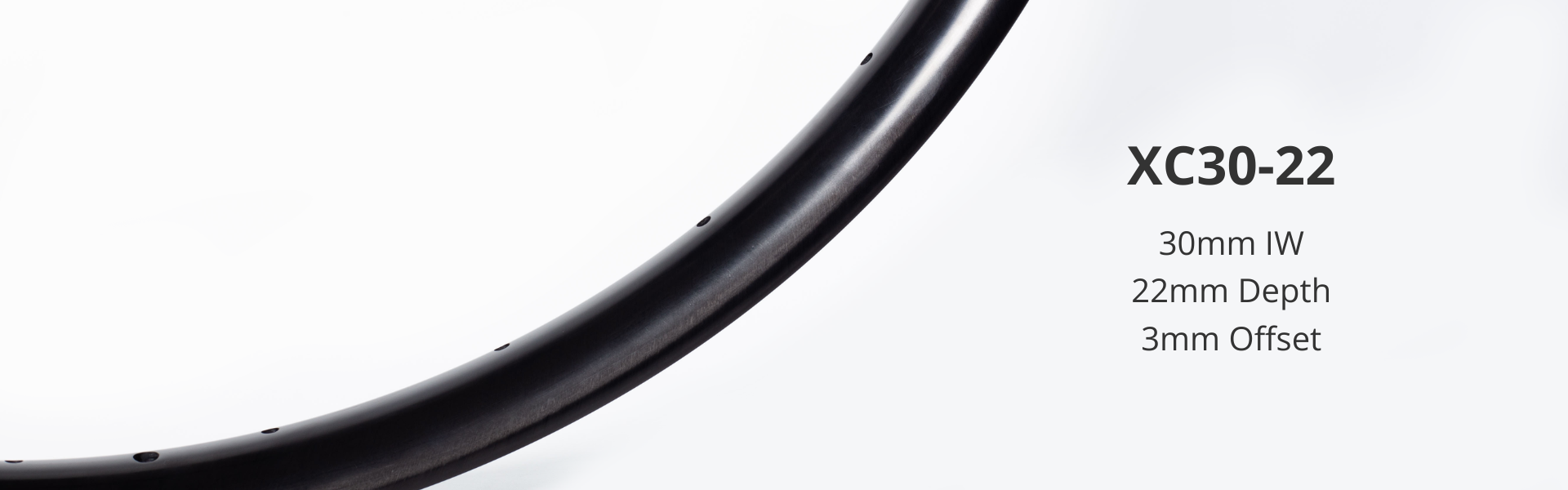
For lightweight XC wheelsets, a 20g difference in rim weight can significantly affect the complete wheel system. The XC30-22 is available in 250g and 270g versions, designed around different performance priorities.

The choice is not simply between a lighter or heavier rim — it is about selecting the right balance between weight, stiffness, durability, and intended riding style.


Key Differences

The 270g version provides higher stiffness and impact resistance, showing lower deformation under the same loads and passing a higher impact test compared with the 250g version. 

Item

270g version

250g version

Vertical deformation @ 50 kgf

Baseline 

+22% flex 

Lateral flex @ 30 kgf 

Baseline 

+14% flex

Impact test (with tire)

130J passed

100J passed

Main focus

Technical XC racing, versatile builds 

Minimum weight & climbing efficiency 

270 g: A Versatile XC Platform

The 270g XC30-22 is designed for wheel brands seeking a balance between low weight, stiffness, and durability.

With a 130 J impact test passed and lower vertical and lateral deformation, it provides a more robust platform for XC wheelsets that need to perform across varied terrain — from fast climbs to increasingly technical descents.

Modern XC racing courses continue to become more demanding, featuring rock gardens, roots, drops, and high-speed technical sections. For these applications, the additional 20 g can provide meaningful gains in stiffness, confidence, and durability.

250 g: For Super-Light XC Builds

The 250g XC30-22 is designed with a different priority: minimizing complete wheel system weight.

It is particularly suitable for low-spoke-count super-light builds, including wheels using lightweight spokes such as carbon spokes.

With a 100 J impact test passed and slightly higher flexibility than the 270g version, it is better suited for lighter riders and XC applications where climbing efficiency and acceleration are the main priorities.

For brands developing an ultra-lightweight flagship wheelset, the 250g version provides more opportunities to optimize the complete system around minimum weight.

The Right Rim Depends on the Complete Wheel System

Rim weight should not be considered in isolation. The final performance of a wheel depends on the combination of rim, hub, spokes, spoke count, lacing pattern, tire, tire pressure, rider and terrain.

The 250g and 270g XC30-22 versions therefore serve different wheel-building philosophies rather than representing a simple “lighter vs. heavier” choice.

For OEM and ODM wheel brands, this allows the same rim platform to support both ultra-light climbing-focused wheelsets and more versatile XC racing wheels.
Get Your Custom Quote in 24h
Full Name*
Phone No
Email*
Message*
We use Cookie to improve your online experience. By continuing browsing this website, we assume you agree our use of Cookie.